

Mandatory installation of lifts in residential buildings
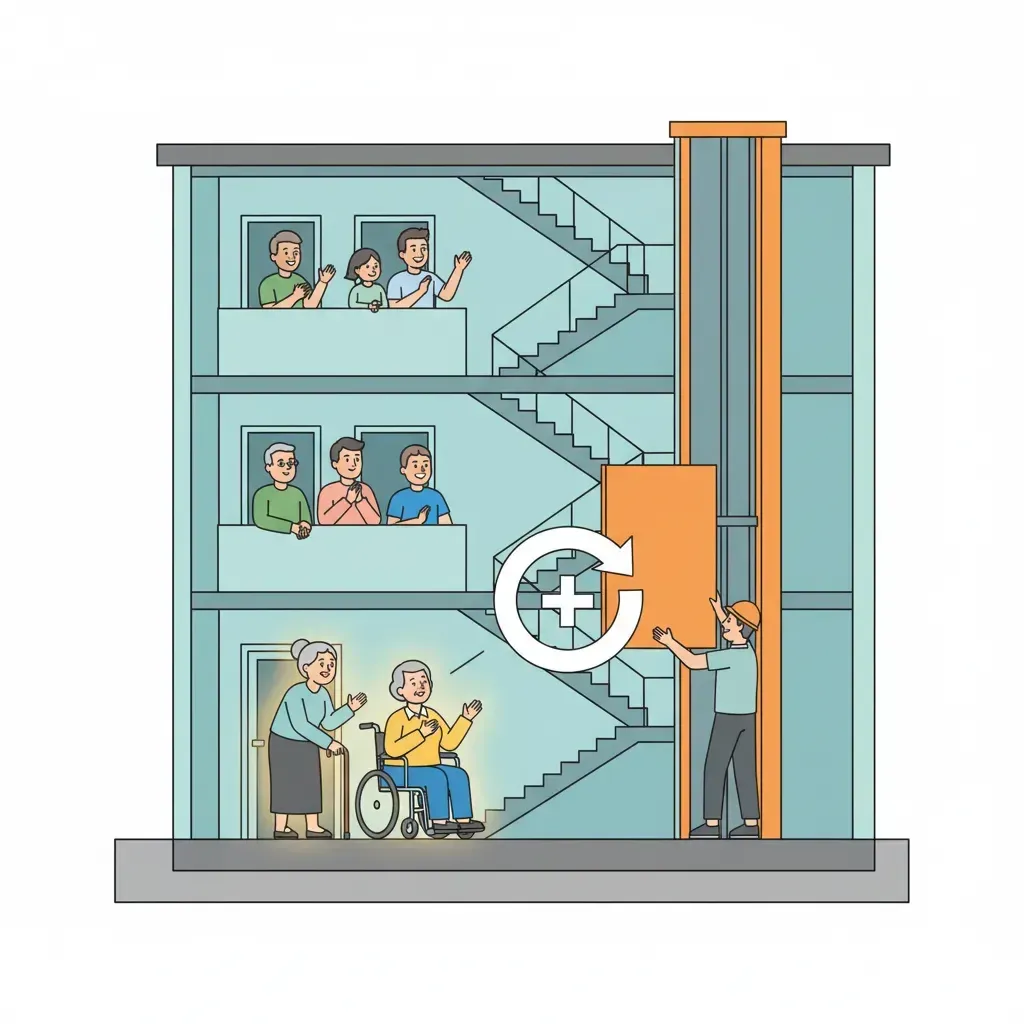
The installation of a lift in a residential community that lacks one is one of the most recurrent and often contentious issues in property management. The mandatory nature of carrying out this work does not depend on the unanimous consensus of the neighbours; rather, it is primarily determined by the Spanish Horizontal Property Law (LPH) and the need to ensure accessibility, especially for people with disabilities or those over 70 years of age.
1. The Factor of Universal Accessibility
The main reason that makes the installation of a lift mandatory is the need to guarantee universal accessibility.
According to the LPH, the community is obliged to carry out necessary accessibility works (such as installing a lift, ramps, or mechanical devices) if these are requested by owners whose homes are inhabited, worked in, or served by people with disabilities or those over seventy years old.
2. The Economic Limit of the Obligation
Even if the request comes from a person with an accessibility need, the community's obligation is not unlimited. The law establishes an economic limit that determines whether the work must be carried out without the need for approval from the Owners' Meeting.
- Mandatory Works: The installation is compulsory if the total cost of the works (after deducting public subsidies and aid) does not exceed twelve ordinary monthly payments of common expenses for the community.
- Exceeding the Limit: If the cost of the work exceeds those twelve monthly payments, the community is not obliged to carry it out, unless the applicant (or the interested party) covers the excess cost.
3. Installation by Community Agreement
If there is no resident who meets the disability or age criteria to demand the work, the lift installation is still possible but requires a majority.
- Simple Majority: Since the reform of the LPH, lift installation is considered an accessibility improvement work and only requires the favourable vote of a simple majority of owners who, in turn, represent the majority of the participation quotas. That is, if it is approved at the Meeting, the rest of the neighbours, including dissenters, are obliged to pay for and permit the work.
4. Responsibility and Financing
When the installation is mandatory due to accessibility reasons and does not exceed the limit of twelve monthly payments, all owners are obliged to contribute to the expenses.
- Exclusions: The LPH does not generally allow for the exclusion of participation in the costs of essential common elements, even if the property is on the ground floor and the owner will not use the lift. Only a unanimous agreement of the community could exempt certain neighbours from payment.
- Cost Exceeding the Limit: If the work exceeds the economic limit, and the Meeting approves it by a simple majority, dissenting owners who are not interested in the improvement are not obliged to contribute to the excess cost (the part that exceeds the twelve monthly payments).